



Engine Overheating: Causes, Signs and What to Do

Engine overheating is a problem no driver wants to experience, especially when you’re stuck in traffic or far from home.
Your vehicle’s engine produces a significant amount of heat while running, but a cooling system
is designed to keep that temperature within a safe range. When something interferes with this process,
the engine temperature can rise beyond normal levels. If the problem is ignored, excessive heat can
damage important engine components and potentially lead to an expensive repair.
Understanding why overheating happens and recognizing the early warning signs can
help you respond before a small problem becomes a major one.
Common Causes of Engine Overheating
There are several reasons a vehicle’s engine may become too hot.
Low Coolant Level
Coolant helps carry heat away from the engine. If the coolant level is too low because of
a leak or another problem, the cooling system may not be able to work effectively.
Cooling System Leaks
A leak in a hose, radiator, water pump, or another component can cause coolant to escape.
Even a small leak can eventually affect the cooling system.
Faulty Thermostat
The thermostat regulates the flow of coolant through the engine. If it becomes stuck or stops
working correctly, the engine may struggle to maintain the proper temperature.
Radiator Problems
The radiator helps release heat from the coolant. Blockages, damage, or other radiator
problems can reduce its ability to cool the engine.
Cooling Fan Failure
Cooling fans help move air through the radiator, particularly when the vehicle is stationary
or moving slowly. If the fan isn’t working properly, engine temperatures can rise.
Regular car maintenance can help identify many of these issues before they develop into serious problems.
Signs Your Engine May Be Overheating
Your vehicle can provide several warnings when engine temperature begins to rise.
One of the most obvious signs is a temperature gauge moving into the hot or red zone.
Some modern vehicles may also display a temperature warning light or message on the dashboard.
Other signs can include:
- Steam or smoke coming from under the hood
- A strong or unusual smell
- Reduced engine performance
- Unusual noises
- Coolant leaking underneath the vehicle
- The air conditioning behaving differently
If you notice these symptoms, don’t simply continue driving and hope the problem disappears.
Understanding your vehicle’s car warning lights can also help you recognize
when a temperature-related warning requires immediate attention.
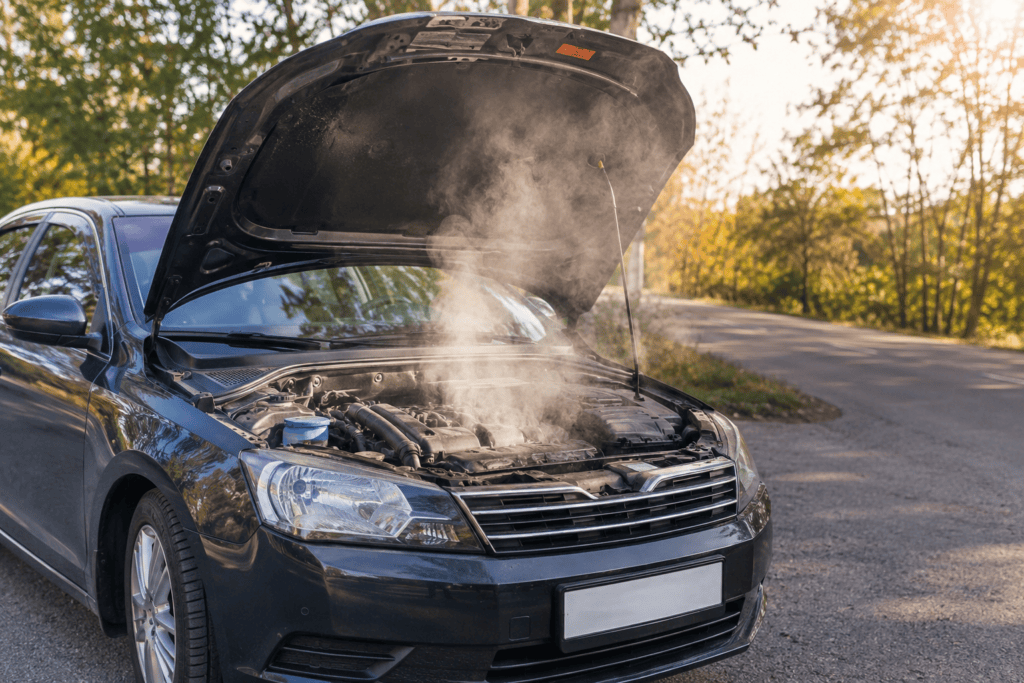
What to Do When Your Car Overheats
If your engine begins overheating while you’re driving, your first priority should be safety.
Look for a safe place to pull over and switch off the engine. Allow the vehicle to cool down before attempting to inspect anything under the hood.
Never remove a radiator cap while the engine is hot. The cooling system can be under pressure, and hot coolant or steam can cause serious burns.
Once the vehicle has cooled, you may be able to check the coolant level if it is safe to do so.
If there is an obvious leak, significant steam, or the temperature rises again after restarting, professional assistance is the safest option.
Continuing to drive an overheating vehicle can turn a manageable cooling-system problem into serious engine damage.
For additional vehicle safety information and guidance, drivers can consult the National Highway Traffic Safety Administration.
How Driving Conditions Affect Engine Temperature
The way and environment in which you drive can influence how hard your vehicle’s cooling system has to work.
Heavy traffic, long periods of idling, steep roads, carrying heavy loads, and high ambient
temperatures can all increase the demands placed on the engine and cooling system.
This doesn’t mean your car should overheat whenever conditions are difficult.
A properly functioning cooling system is designed to handle normal operating conditions.
However, challenging conditions can make an existing cooling-system problem more noticeable.
This is another reason why paying attention to your vehicle and practicing good driving habits matters.
When You Should Get Professional Help
Not every temperature increase means the engine has suffered serious damage,
but repeated overheating should never be ignored. If your vehicle overheats more than once,
loses coolant regularly, produces steam, or continues to show a temperature warning after
cooling down, arrange a professional inspection. A mechanic can check the cooling system, identify leaks,
test relevant components, and determine whether there is an underlying problem.
The sooner an issue is diagnosed, the more likely it is that you can avoid extensive engine damage.
Your engine works hard every time you drive, and the cooling system plays an important role in
keeping everything operating within a safe temperature range. Knowing the signs of overheating means you can react quickly
instead of waiting until your vehicle breaks down completely. Regular servicing, paying attention to warning signs,
and responding to unusual changes can all help protect your engine. Taking care of your vehicle is also about creating a better overall driving experience.
A properly maintained, comfortable, and well-organized car makes every journey easier.
At Alcrux, we believe that a perfectly accessorized car is part of what makes the drive better,
combining practicality, comfort, and convenience for everyday drivers.