



Why Your Tires Wear Out Unevenly

Have you ever noticed that one tire looks more worn than the others? Maybe the inside edge
is almost smooth while the rest of the tire still has plenty of tread. Uneven tire wear is something
many drivers overlook, but it can reveal a lot about how your car is being driven or maintained.
Your tires are in constant contact with the road, so changes in their condition can affect handling, comfort, and safety.
Why Tire Wear Matters
Tires are designed to wear gradually and relatively evenly across the tread. When one area wears
significantly faster than another, it can indicate that something isn’t quite right.
Uneven wear can reduce the tire’s useful life and may affect how your vehicle handles,
particularly during braking, cornering, or wet conditions.
Regular tire maintenance helps you spot these changes before they become a bigger problem.
Common Causes of Uneven Tire Wear
Several things can cause a tire to wear differently from the others.
Incorrect Tire Pressure
Overinflation or underinflation can change how much of the tire touches the road.
This can lead to uneven wear and may also affect handling and fuel efficiency.
Wheel Alignment Problems
If your wheels are not properly aligned, the tires may not sit correctly on the road.
You may notice faster wear on the inside or outside edge of the tread.
Hitting potholes, kerbs, or other obstacles can sometimes contribute to alignment problems.
Worn Suspension Components
Your suspension helps keep the tires in proper contact with the road.
Worn or damaged components can cause irregular movement and contribute to uneven tire wear.
Poor Tire Rotation
Different tires can experience different levels of wear depending on their position on the vehicle.
Following the manufacturer’s recommendations for tire rotation can help promote more even wear.
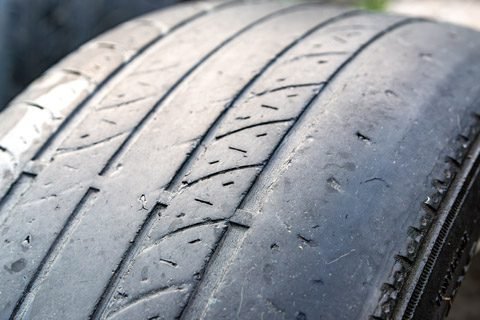
What Your Tire Wear May Be Telling You
Take a look at the tread the next time you check your vehicle.
If the center of the tire is wearing faster than the edges, over inflation may be a possible cause.
If the edges are wearing more quickly, underinflation may be contributing.
If one side of the tread is noticeably more worn than the other, alignment or suspension issues may need to be checked.
These patterns can provide clues, but they don’t replace a professional inspection.
How to Prevent Uneven Tire Wear
A few simple habits can help your tires last longer.
Check your tire pressure regularly and use the pressure recommended by your vehicle manufacturer.
Inspect your tires for unusual wear, cuts, bulges, or other visible damage.
Keep up with recommended tire rotations and wheel alignment checks,
especially if you’ve recently hit a large pothole or noticed that the car pulls to one side.
You can also include tire condition in your regular car safety checks before longer journeys.
For more information about tire safety, pressure, and maintenance, visit the
National Highway Traffic Safety Administration Tire Safety page.
Don’t Ignore What Your Tires Are Telling You
Your tires can tell you more than whether it’s time to buy a new set.
Uneven wear can be an early clue that your vehicle needs attention.
Taking a few minutes to inspect your tires regularly can help you notice changes before
they become a safety concern or leave you replacing tires sooner than expected.
And while proper maintenance keeps your car performing well, the overall driving experience matters too.
At Alcrux, we believe a perfectly accessorized car makes the drive better, and we’re your trusted
plug for quality car accessories that add comfort and convenience to every journey.